

If you know anything about American’s film history, you probably know about Spike Lee’s famous film: Do the Right Thing (1989). Most importantly, you must have watched the movie and even today, you must remember the riot scene at the end of the movie. This particular scene included most of the social issues debated by Lee’s cinematography. Although the whole movie implements discussed topics of the late 80s, the part with the most impact is this scene. Through many cinematic and formal properties, elements like racisms and ethnic equality are manipulated in the sequence. With the use of mise-en-scene, dialectic montage, music, manipulation of reality and racial stereotypes, Lee provoked discussions and reactions from his viewers.

The scene discussed starts exactly when Radio Raheem (Bill Nunn) and Buggin’ Out (Giancarlo Esposito) enter Sal’s (Danny Aielo) pizzeria. Raheem is carrying his radio and, like always, he’s playing the song Fight the Power by Public Enemy very loudly.
Having asked Radio Raheem earlier that day to turn down the music, Sal is now losing his temper and he starts yelling at Raheem to stop the music. Since Radio Raheem and Buggin’ Out specifically came in the pizzeria to threat Sal about the pictures on the wall of the restaurant, the discussion quickly takes another angle. Everybody starts yelling nonsense at each other while Sal takes the baseball bat he has behind the counter and starts hitting on Raheem’s loud radio, which is on the counter. The music stops and leaves the whole place completely silent until Radio Raheem jumps on Sal and they start to fight. They eventually end up outside, the cops arrive and try in vain to separate everybody. In the middle of the screams, the spits and the fighting, three policemen begin to strangle Radio Raheem with their police baton. They only stop once he’s dead even if he had stopped being a threat long before his last breath.

In the midst of all this chaos, the main character, Mookie (Spike Lee), takes a garbage can and throws it at the window of his boss’s pizzeria. The crowd of black people get excited again and so they start to demolish everything in Pal’s restaurant. After setting fire to the place, firemen arrive and try to do their job as black people are fighting against them. Then, we see Mookie sitting on the pavement on the other side of the street, completely awestruck by what he’s seeing. The scene ends with Smiley’s (Roger Guenveur Smith) character pinning pictures of Martin Luther King and Malcolm X to the wall of the burning pizzeria. The whole scene lasts for about twelve minutes leaving any spectators into a thoughtful state of mind.

This scene sure leaves everyone into thoughtfulness, but it’s not just the actions in it that are doing this effect. Lee uses many subtle mise-en-scene strategies to show the relation between the characters. The first things he uses throughout the scene are high and low angles to show superiority or inferiority. The first example happens when Radio Raheem and Buggin’ Out enters the pizzeria.

The camera is placed lower so that they look taller whereas the camera is placed over Pal’s head to show that he’s inferior to them at that moment. The second example happens after Pal destroys Raheem’s radio, his face is shown from bellow, making him the superior race as he’s white. Radio Raheem’s face is shown from above to make him inferior. The third example happens after they start to fight. All the shots of black people are shown from bellow except one shot where we see Mookie. This character works for Pal so he doesn’t necessarily want to cause him any trouble. Therefore he doesn’t feel like the race he belongs to. Also, while Pal is beaten; shots of his sons are shown from above to show their inferiority.
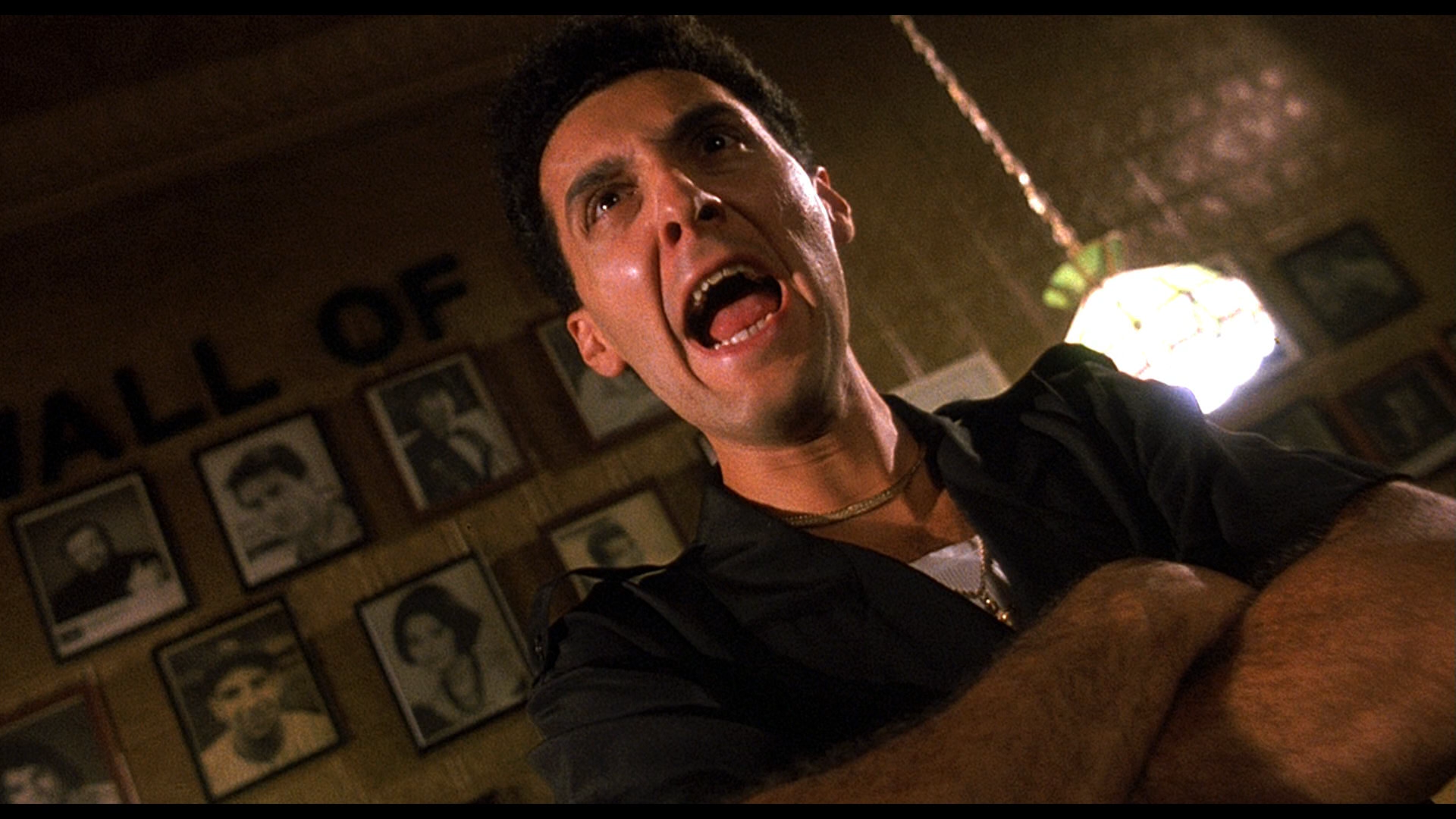
The second thing that Lee uses in this scene are canted frames. These distorted frames are used to show the twisted relationships between the characters. Small mise-en-scene moves like these often catch the eye of the spectators. It reminds them that they are watching a movie and it makes them question themselves (Carter, 2012). This is part of why Spike Lee’s movie is so brilliant.

Even though Lee’s use of mise-en-scene is smart, his dialectical technique and the use of the song Fight the Power are as well. In this particular scene he uses dialectical montage only once. This type of montage comes from Eisenstein, a soviet film director from the 1920’s. Dialectical editing is less time coherent than other types of editing. It plays with emotions and confusion to provoke a reaction from the spectators. It is possible to see it when Mookie throws the garbage can at the pizzeria window. First, there’s a shot of the tool breaking the glass from outside and then, there’s a shot of the metal container and millions of pieces of destructed glass from inside the restaurant. The same action can be seen twice even though it only happened once. Dialectical montage is used in this scene to create opposition and to remind the audience that they are watching a movie. (Hewson, 2017) Lee desires to remind the fictional aspect of his movie to his audience in part because he wants them to think and also because he expects a reaction from them. In spite of that, the song Fight the Power is used multiple times during the scene. This song was written by black people and with the purpose to show their pride. The song is often heard in the presence of Radio Raheem. After his death, the song only starts to play as a shot of the burning interior of the pizzeria is shown and it continues to play until the end of the scene. The song was cleverly place there because, as the lyrics are heard, the shot seen is proof that black people of this fictional neighbourhood indeed fought the power.

As it should be known, this film was shot in a New York neighbourhood. Lee deliberately insisted that his movie wouldn’t be filmed in a studio for sake of realism. Interestingly though, he made many changes to the streets where he decided to film. For example he replaced some windows and some doors, he repainted walls, he added graffiti and he even built the main set of the whole film: the pizzeria. The actors he paid to walk in the streets were purposely dressed in bright colors in order to refer to African culture. He even paid security to guard the area to make sure the prostitutes and drug dealers of the surroundings wouldn’t be seen on set while he was filming. The reason behind this is to show the majorly white audience the opposite of what they expected. Lee wanted an audience focused on the racial situation, not one focusing on all the wrongs of the “inferior race”. He omitted to use certain racial stereotypes therefore making a greater impact.
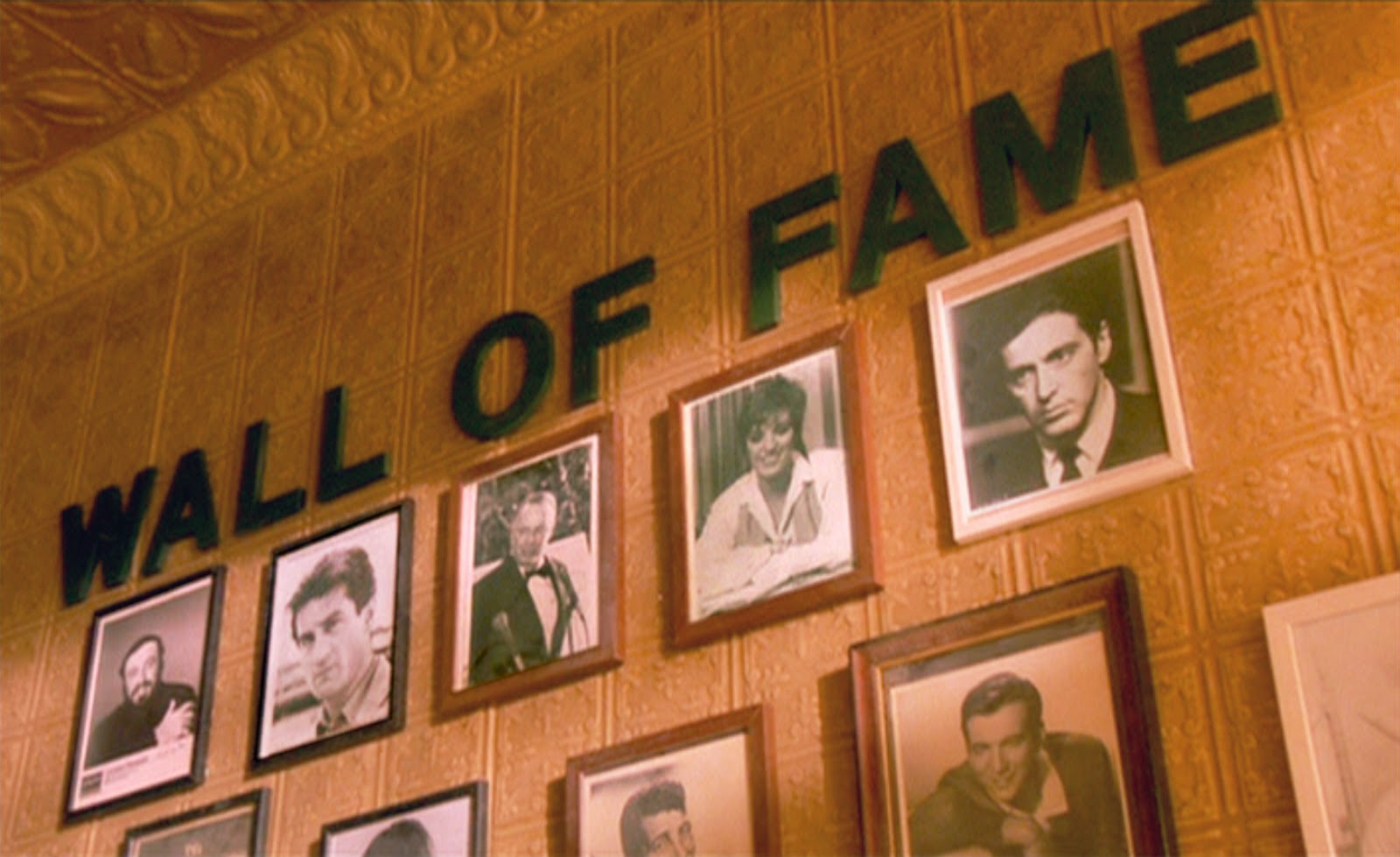
Even though there are some dismissed tropes in Spike’s movie, there are still some. There is one in particular that seems to be necessary, otherwise it would change the whole course of the story. This trope is the extent of Buggin’ Out’s reaction in relation with the original problem which is, the owner’s choice of pictures hanging on the wall. Indeed, Buggin’ Out’s opinion is personal and whether Pal wants to put pictures of Italian celebrities on the wall of his pizzeria or not shouldn’t bother the black man enough to cause a riot. This trope is called disproportionate retribution and they are often used in black movies. It means that the cause and the event aren’t correlating. In other words, this trop represents that black people seem to exaggerate more than white people would.
In summary, the movie is a call for racial justice. Spike Lee wanted to create discussions among people and he succeeded. With the use of fine mise-en-scene, Lee displayed relations between races. He used dialectical montage to remind the audience that they were sitting in a theatre and music like Fight the Power to make his message appear stronger and clearer. Manipulation of reality is used to play with people’s minds and make them forget about their original misconceptions. Finally Lee used generic tropes to expose the vulnerability of black communities even more. The film he created is reactionary. Though the riot scene could’ve been avoided, it was necessary to make an impact and it was used brilliantly.
Watch it on Netflix
I’ve decided to post an analysis on Do the Right Thing since Netflix Canada announced that the movie would be available on their site starting June 5th. For any of you that are Netflix users, I invite you to go watch and enjoy the movie. If not, you may purchase the DVD by clicking on this link:
Do the Right Thing (20th Anniversary Edition) [Blu-ray] (Bilingual)
 Au cas ou ça t'aiderais